One of the biggest misconceptions I run into during home inspections at HOI Property Services in Peoria and Central Illinois is that attic mold always means there is a roof leak. It doesn't. Poor attic ventilation can let warm, humid air condense on cold roof decking until mold takes hold — no leak required. Roof leaks and plumbing problems are common causes of mold, but they are far from the only ones.
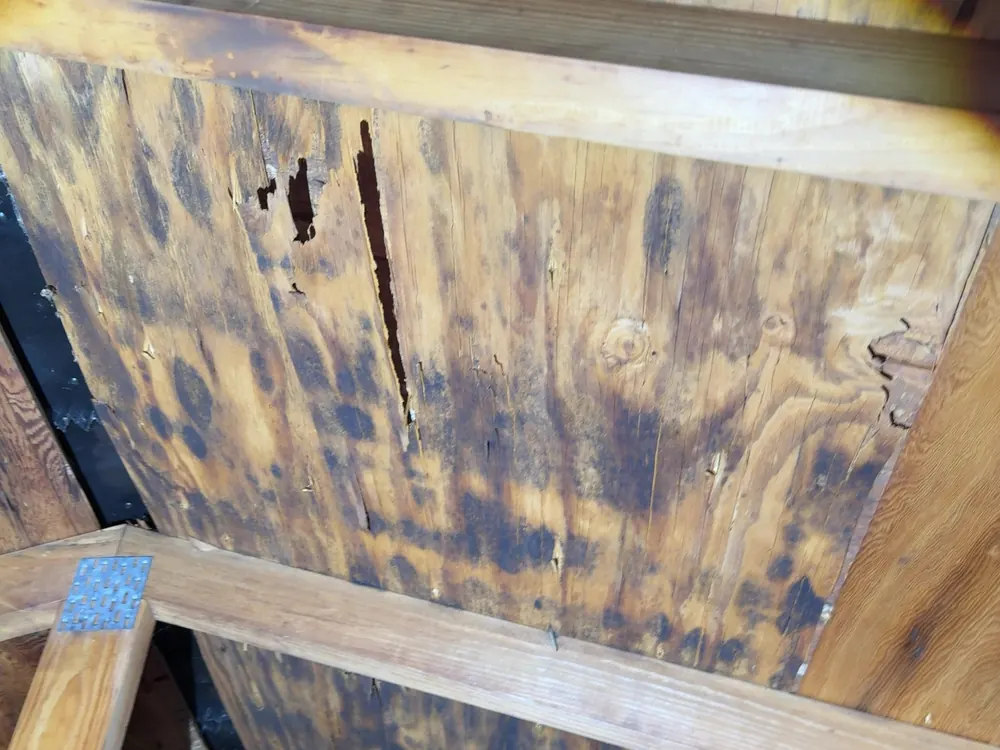
During a recent attic inspection, I came across a situation that is a good example of why looking beyond the obvious matters. There was significant discoloration and suspected mold growth on the roof decking, but I could not identify a corresponding roof leak or obvious water entry point.
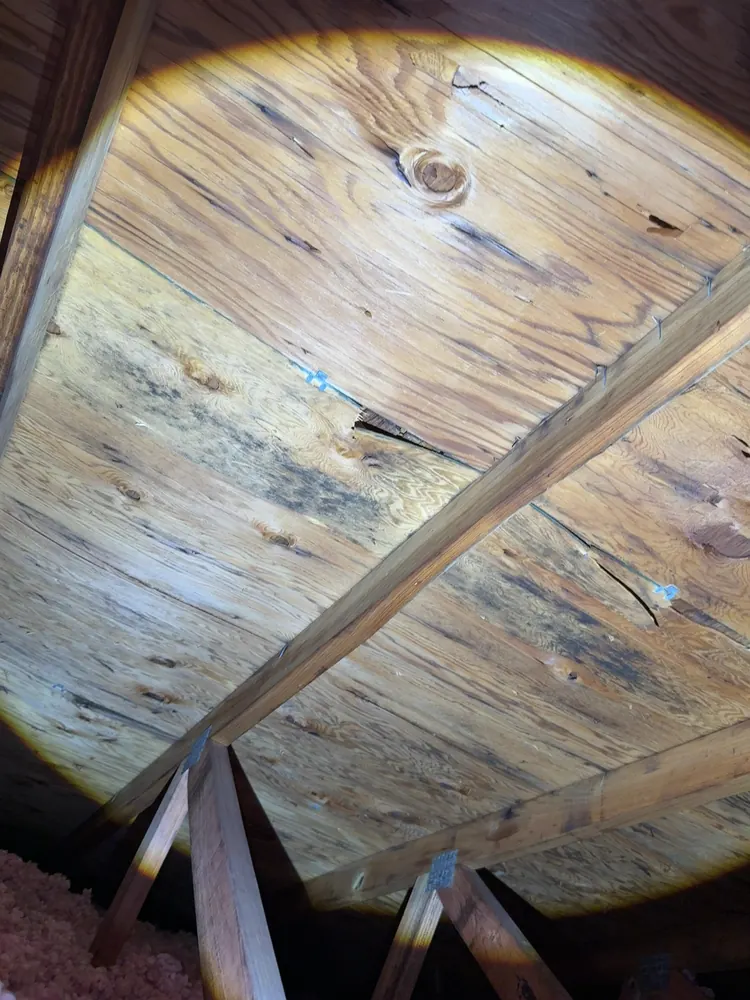
Discoloration and suspected mold growth across the underside of the roof decking — with no roof leak to explain it.
So where was the moisture coming from?
When Poor Ventilation Becomes a Mold Problem
An attic needs to breathe. Proper ventilation allows moisture-laden air to escape while bringing in fresh outside air through the appropriate intake and exhaust openings.
When ventilation is inadequate, moisture can accumulate in the attic. During colder weather, warm, humid air from the living space can enter the attic and condense on cold roof decking. Over time, repeated condensation can create the conditions necessary for mold growth.
In this attic, one thing stood out right away: there were no baffles at the eaves. Baffles hold the insulation back from the soffit vents so outside air has a clear path into the attic. Without them, blown-in insulation can settle into the eaves and choke off the intake ventilation the attic depends on.
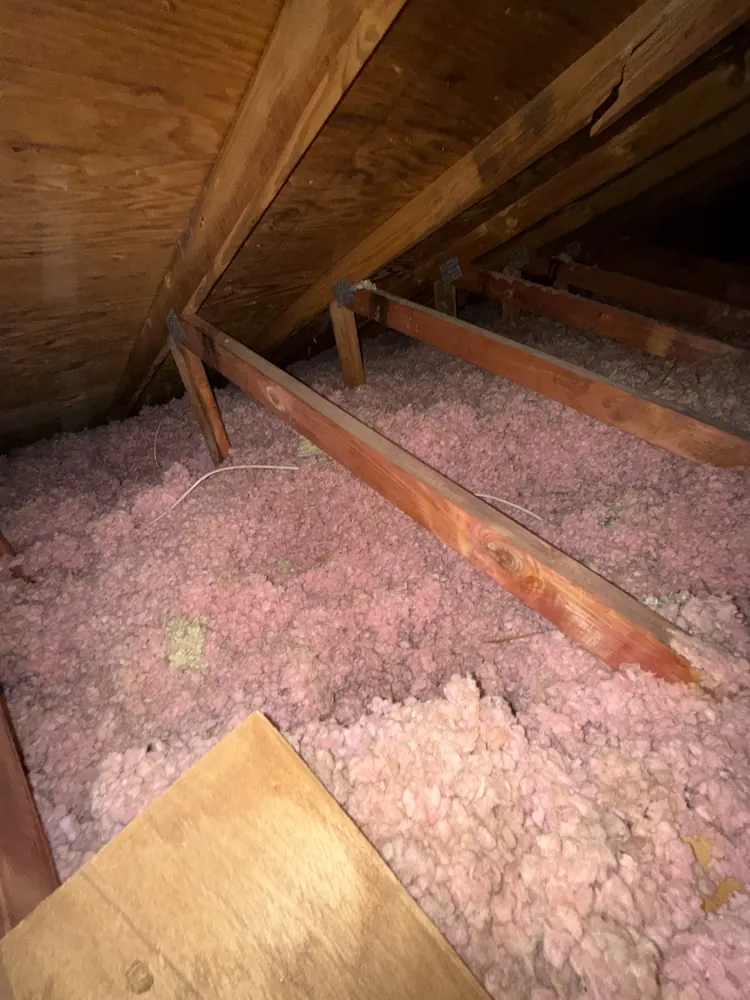
No baffles at the eaves. Nothing is holding the blown-in insulation back from the soffit vents.
This is particularly important in Central Illinois, where we experience everything from humid summers to freezing winter temperatures.
A homeowner may never notice a problem inside the living space. There may be no ceiling stains, no dripping water, and no obvious signs of a roof leak. Meanwhile, the underside of the roof decking can be experiencing repeated moisture exposure.
That is exactly why attic inspections matter. It is the same lesson as a garage ceiling where condensation from a leaking supply duct fed mold growth: the stain tells you something is wrong, but the moisture source is the real finding.
Covering Up Damaged Roof Decking Doesn't Fix the Problem
Another concerning detail I found during this inspection was the condition of the roof decking itself.
Rather than removing the existing damaged plywood, additional OSB sheathing had been installed over the original decking.
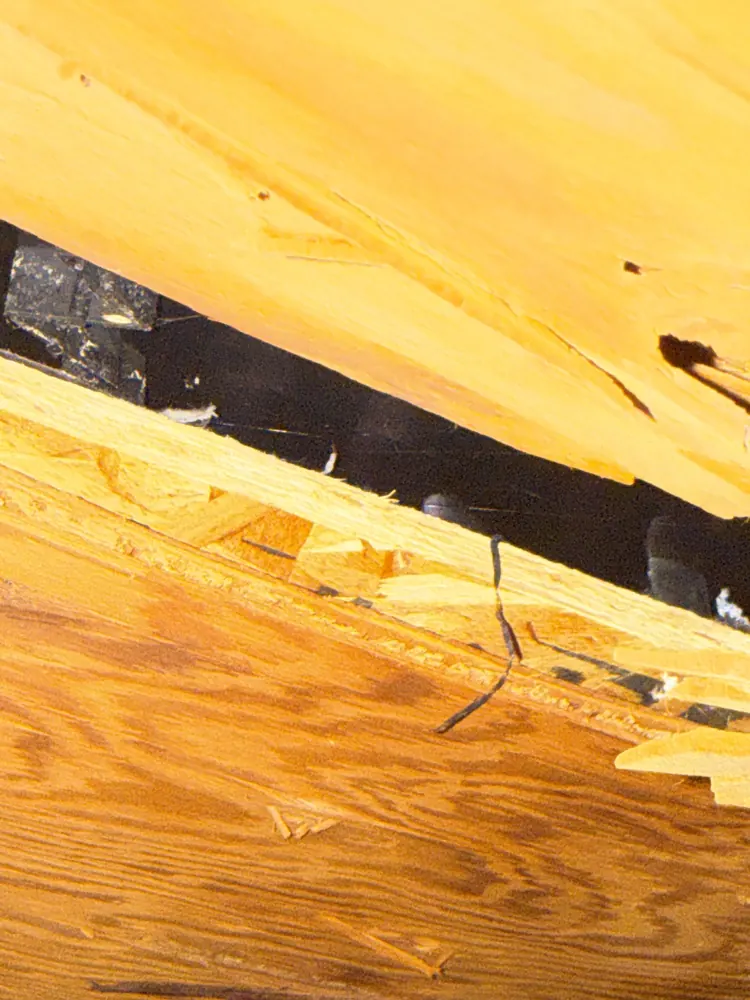
New OSB sheathing installed on top of the original plywood decking instead of replacing it.
This is something buyers and sellers should pay attention to.
Installing new sheathing over existing damaged material does not automatically correct the underlying problem. If the original plywood has deteriorated from prolonged moisture exposure or mold growth, covering it up simply makes the original condition harder to see.
It also raises important questions:
Why was the original decking left in place?
Was the moisture source ever identified and corrected?
Was the original wood structurally compromised?
Is moisture still trapped between the layers?
Was the additional sheathing installed as a repair or simply to cover existing damage?
These are questions that deserve answers before a real estate transaction moves forward.
Why This Can Become a Big Problem When Selling a Home
This is where an attic issue can turn into a much bigger financial headache.
A seller may believe the roof is in good condition because there are no active leaks and the roof appears relatively sound from the exterior. However, a buyer's home inspector may enter the attic and discover deteriorated decking, suspected mold growth, and multiple layers of roofing sheathing.
That discovery can change the entire conversation.
The buyer may request additional evaluation, documentation of previous repairs, or corrective work before moving forward. Depending on the extent of the damage, a roofing contractor may need to evaluate the decking and determine whether removal and replacement are necessary.
What could have been addressed proactively before listing the property can become a negotiation issue during the sale.
Covering up a problem does not make it go away. In some cases, it makes the eventual repair more involved and expensive.
What I Look for During an Attic Inspection
When inspecting an attic, I am looking at much more than insulation. Some of the things I pay close attention to include:
Roof decking: Discoloration, deterioration, suspected mold growth, delamination, and previous repairs.
Ventilation: Whether intake and exhaust ventilation are adequate and functioning as intended.
Roof framing: Signs of prolonged moisture exposure, deterioration, or compromised wood.
Insulation: Coverage, condition, and whether it is blocking soffit ventilation.
Moisture conditions: Signs of condensation, elevated moisture, and potential sources of humidity.
Previous repairs: Whether damaged materials were properly addressed or simply covered.
A good inspection is about understanding what happened, what is happening now, and what could become a problem in the future.
Don't Assume Mold Means a Roof Leak
The important takeaway from this inspection is simple: mold in an attic does not automatically mean the roof is leaking.
Poor ventilation, indoor air leakage, and condensation can all contribute to moisture problems. Identifying the actual moisture source is the most important part of addressing the issue.
Simply treating or covering the visible growth without correcting the underlying moisture conditions is not a permanent solution.
At HOI Property Services, I believe homeowners and buyers deserve to understand what is happening inside the homes they own or are considering purchasing. That includes the areas most people never see.
If you are buying a home, selling a home, or concerned about discoloration or suspected mold in your attic, don't wait until it becomes a problem during a real estate transaction. HOI Property Services provides professional home inspections and mold evaluations throughout Peoria and Central and Northern Illinois.
Book an inspection online or call or text (309) 712-4189 to schedule an inspection or discuss a mold evaluation.