A Particle ID test is a non-biased, lab-analyzed snapshot of exactly what is floating in the air you breathe at home. Unlike consumer air-quality monitors that only count particles by size, our test sends a physical air sample to an accredited lab where a mycologist identifies each particulate under a microscope and tells you what it is — pollen, soot, fiberglass, skin cells, insect fragments, charred wood, and dozens more. If something in your home is irritating your eyes, lungs, or skin, this is the test that names it.
Heart of Illinois Property Services performs the sampling on-site; PriorityLab performs the microscopy and writes the report.
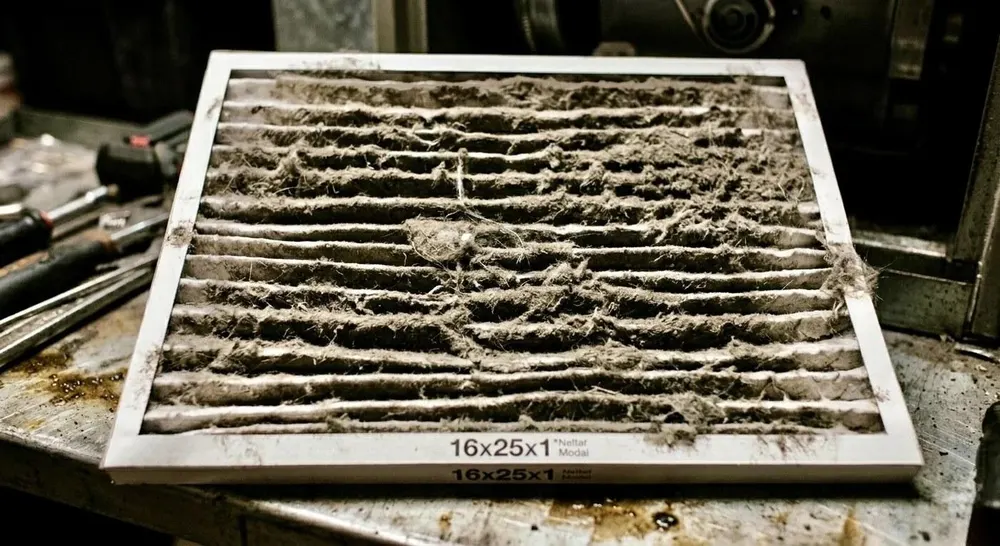
A standard mold test only looks for fungal spores. A Particle ID test looks at everything else — every non-mold particulate captured on the same type of cassette. That matters because most indoor-air complaints (chronic congestion, headaches, asthma flare-ups, "this house smells weird") aren't mold. They're a mix of combustion byproducts, building materials, fibers, skin and hair, pollen, and pest debris.
Particle ID is the test that finds those root causes when a mold test comes back clean and you still feel bad.
We use a Breeze ET Lite environmental pump paired with Breeze ST sampling cassettes — the same professional sampling system we use for mold work. Each cassette pulls a 150-liter air sample at a calibrated flow rate, capturing airborne particulates on a sticky slide that is sealed and shipped to PriorityLab.
Sampling is quick, quiet, and non-invasive — typical homes are completed in under an hour with no disruption to the household.
At minimum, every Particle ID inspection includes one outdoor baseline sample plus at least two indoor samples. Beyond that, we follow the lab's recommended density of one indoor sample per 1,000 square feet of living space, with at least one sample per level on multi-story homes regardless of square footage.
All samples are analyzed by PriorityLab, a leading indoor-environmental laboratory directed by Dr. John Shane, PhD — a mycologist regarded as one of the country's leading indoor air quality experts. Every Particle ID slide is examined under a microscope by trained analysts who count and identify each particulate type, document size and concentration, and write a Comments section that flags root-cause patterns (combustion sources, filtration failures, infiltration, occupant activity, etc.).
You receive a multi-page PDF that lists each particulate identified at every sampling location, the relative concentration, and the particle size range — smaller particles penetrate deeper into the lungs, so size matters. The Comments section translates the raw data into concise findings and likely sources. Outdoor and indoor samples sit side-by-side so you can immediately see which particulates are elevated indoors versus what's just blowing around outside.
View a sample lab report (PDF) to see exactly what you receive, including the detailed particle table and glossary.
PriorityLab's analysts can identify more than 40 different airborne particulates from a single Particle ID sample, including:
People who order a Particle ID test usually fall into one of three groups:
The report can be shared directly with an allergist or pulmonologist — and is sometimes used to diagnose Hypersensitivity Pneumonitis (HP), a serious immune response to inhaled particulates that an allergy panel alone won't catch.
Elevated indoor particle counts almost always mean your filtration is not operating the way it should. The most common fixes are simple and inexpensive: upgrade to a MERV 10+ furnace filter, change filters more often than the manufacturer's "up to 90 days" recommendation, and consider adding a HEPA portable unit in the room where occupants spend the most time.
Combustion findings (soot, charred plant debris) point to fireplaces, candles, or nearby wildfire smoke infiltration. Construction findings (fiberglass, gypsum debris, silica) point to a recent project or unsealed building cavity. Your report's Comments section maps each finding to its likely source.
In our nine-county service area we most often see elevated levels of: pollen (especially oak, grass, and undifferentiated tree pollen during spring), fiberglass and cellulose fibers from attic and HVAC infiltration, skin cells and synthetic fibers from textile shedding, soot and charred plant debris from fireplaces and outdoor burning, and dust-mite fragments in carpeted bedrooms. Outdoor baselines pick up agricultural particulates that are normal for the region — what matters is whether they're concentrated indoors above the outside reading.
Particle ID testing isn't only for homes. Schools, daycares, offices, medical buildings, and any commercial space where occupants report symptoms can be tested using the same protocol — outdoor baseline, multi-point indoor sampling at one cassette per 1,000 SF, and lab analysis. We work with property managers and facility teams across Central and Northern Illinois who need documented air-quality data, not a guess.
Heart of Illinois Property Services is owned and operated by Chase Owen, who brings 12 years of real estate experience and IAC2 certification (Indoor Air Consultants) to every Particle ID inspection. Sampling is performed in person, never sub-contracted. Lab analysis is performed by Dr. John Shane, PhD — PriorityLab director and one of the country's leading indoor air quality experts.
We perform Particle ID sampling across a nine-county footprint: Peoria, Tazewell, Fulton, Woodford, Ogle, La Salle, Lee, Winnebago, and DeKalb counties. That covers a roughly 2-hour radius from Peoria, including Bloomington, Pekin, Morton, East Peoria, Washington, Canton, Eureka, Metamora, Ottawa, Streator, Dixon, Rochelle, and DeKalb.

All results independently verified by PriorityLab
If anyone in the home has unexplained respiratory symptoms, recently moved into the property, or just survived a wildfire-smoke or renovation event, yes — it's the test that names what's actually in your air.
A mold test only looks for fungal spores. Particle ID identifies every other airborne particulate — fibers, soot, pollen, skin cells, insect fragments, building materials, and more. Most indoor-air complaints aren't mold; they're a mix of these.
PriorityLab turnaround is 24 hours from sample receipt. Friday samples typically return Monday.
PriorityLab recommends a minimum of once per year for households with sensitive occupants, and any time conditions change (new pet, renovation, smoke event, etc.).
Particle ID testing is priced based on home size and sample count. Contact us for a quote — adding it as an add-on to a scheduled home inspection is the most economical option.
One outdoor baseline plus at least two indoor samples at minimum, then one indoor sample per 1,000 sq ft of living space. Multi-story homes need at least one sample per level regardless of total square footage.
Yes. Schools, daycares, offices, medical buildings — same protocol, same lab analysis. We work with property managers and facility teams who need documented air-quality data.
Yes — the report is written to be shared with allergists or pulmonologists, and is sometimes used to diagnose Hypersensitivity Pneumonitis (HP).
Book a standalone Particle ID inspection or add it as a low-cost upgrade to a scheduled home inspection. We typically respond the same business day.
Schedule a Particle ID Test
Utilize my professional services for thorough property inspections, guaranteeing safety and well-being. With over a decade of experience, I will ensure your readiness for home ownership. Additionally, I can provide mold and radon testing for your current or future residence.
Meet Your Inspector