Home Safety, Radon, Testing Services Chase Owen Home Safety, Radon, Testing Services Chase Owen

Certified Radon Testing in the Peoria Area: What Homeowners Need to Know

Radon is invisible, odorless, and the second leading cause of lung cancer in the United States. Homes across Peoria and Central Illinois face higher-than-average risk due to uranium-rich Midwest soil. Here is what every homeowner and homebuyer should know about certified radon testing.
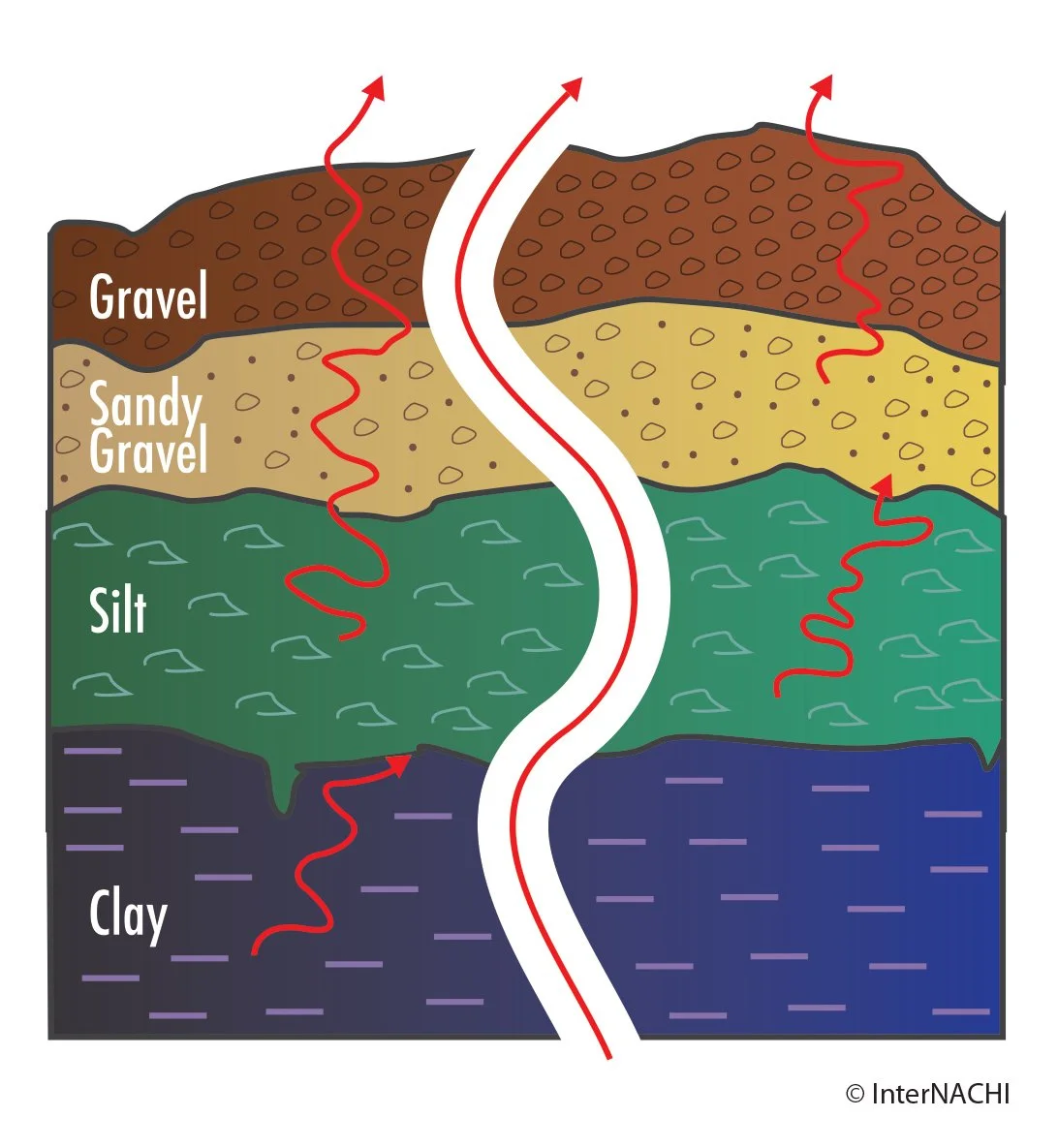
radon movement through soil

The 2nd Leading Cause of Lung Cancer

Radon gas moves through soil layers and enters homes through cracks, pipes, and foundation gaps — making professional testing essential for homeowners.

Radon is one of those hazards that never announces itself. It has no color, no smell, and no taste, yet it is the second leading cause of lung cancer in the United States. For homeowners and homebuyers in Peoria, Bloomington, and the surrounding Central Illinois communities, understanding radon and knowing how to test for it is not optional — it is essential.

At Heart of Illinois Property Services, certified radon testing is one of the core services we provide to families across the Peoria area. Here is what you should know before buying, selling, or simply living in your current home.

Why Central Illinois Homes Are at Risk

Radon forms naturally when uranium in the soil breaks down into radium and then decays into radon gas. The Midwest sits on soil that is particularly rich in uranium, which means homes in Peoria, Tazewell, Woodford, and McLean counties face a higher-than-average risk of elevated radon levels.

The gas enters your home through the path of least resistance — cracks in the foundation, gaps around pipes, loose-fitting joints, floor drains, and even through porous concrete. Once inside, radon can accumulate to dangerous concentrations, especially in basements and lower levels where most families spend significant time.

What the Numbers Mean

Radon is measured in picocuries per liter of air (pCi/L). The Environmental Protection Agency has set 4 pCi/L as the action level — the point at which remediation is strongly recommended. Both federal and Illinois state guidelines align on this threshold. However, the EPA also notes that there is no truly safe level of radon exposure, and homeowners should consider mitigation even at levels between 2 and 4 pCi/L.

To put this in perspective, a home with radon levels at 4 pCi/L exposes its occupants to roughly the same radiation risk as smoking half a pack of cigarettes per day. That is a risk worth taking seriously, particularly for families with children or anyone with a history of respiratory illness.

How Professional Radon Testing Works

When you schedule radon testing with HOI Property Services, the process is straightforward and designed to give you accurate, reliable results.

We place a continuous radon monitor in the lowest livable level of your home. The device records radon levels at regular intervals over a minimum 48-hour testing period. During this time, we ask that you maintain closed-house conditions — keeping windows and exterior doors shut as much as reasonably possible — to ensure the test reflects typical indoor radon accumulation.

Once the testing period is complete, we retrieve the monitor and analyze the data. Every result we provide is independently verified by PriorityLab, a nationally recognized laboratory. This independent verification gives you confidence that your results are accurate and defensible, whether you are negotiating a real estate transaction or making decisions about your family's health.

When Should You Test?

There are several situations where radon testing should be at the top of your list. If you are buying a home in Peoria or anywhere in Central Illinois, testing before closing gives you leverage to negotiate remediation with the seller. If you are selling, proactive testing demonstrates transparency and can prevent delays during the buyer's inspection period.

Even if you are not buying or selling, the EPA recommends that every home be tested at least once, and retested every two to five years. Radon levels can change over time as soil conditions shift, foundations settle, and weather patterns vary. A home that tested below 4 pCi/L five years ago may read differently today.

What Happens If Levels Are High?

A high radon reading is not a reason to panic — it is a reason to act. Radon mitigation systems are well-established technology that typically reduce indoor radon levels by up to 99 percent. Most systems involve a vent pipe and fan that draw radon from beneath the foundation and release it safely above the roofline.

We can guide you through understanding your results and help you determine the right next steps. Our goal is to make sure you have the information and confidence to protect your home and your family.

Certified Radon Testing You Can Trust

Heart of Illinois Property Services provides certified radon testing across Peoria, Bloomington, Morton, East Peoria, Washington, and the broader Central Illinois region. Every test is conducted using professional-grade equipment, follows EPA testing protocols, and is backed by independent laboratory verification through PriorityLab.

Whether you are a first-time homebuyer, a long-time homeowner, or a real estate professional looking for a dependable testing partner, we are here to help.

Ready to schedule your radon test? Contact HOI Property Services today at (309) 712-4189 or use HOI Chat on our home page.

Read More
Chase Owen Chase Owen

Thermal Imaging: Standard with Every Home Inspection

Learn why HOI Property Services includes thermal imaging with every home inspection in Peoria, IL — and how it reveals hidden issues like moisture, insulation gaps, and energy loss that a standard visual inspection can miss.

When you schedule a home inspection with HOI Property Services, thermal imaging comes standard — at no extra charge. While many inspection companies treat infrared technology as a premium add-on, we believe every homeowner deserves the full picture of their property’s condition.

What Is Thermal Imaging?

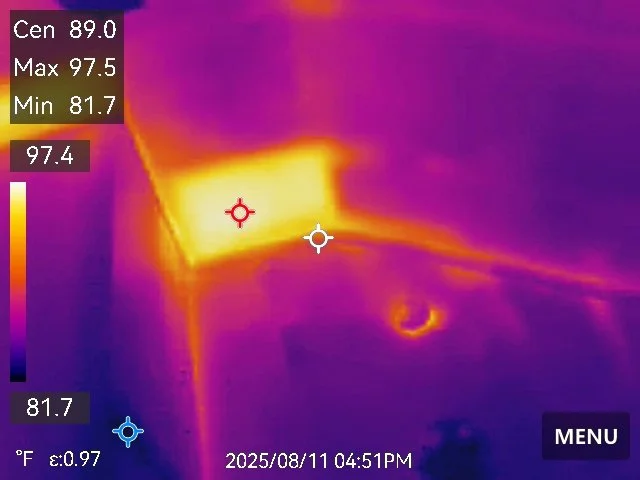
Thermal imaging uses an infrared camera to detect temperature variations across surfaces in your home. These temperature differences can reveal problems that are completely invisible to the naked eye. The image above is a real thermal scan from one of our inspections, showing temperature readings ranging from 71.8°F to 81.3°F across a single area — a clear sign that something beneath the surface needs attention.

What Can Thermal Imaging Detect?

Thermal cameras help our inspectors identify a wide range of hidden issues that would otherwise go unnoticed during a standard visual inspection.

Moisture intrusion is one of the most common findings. Water behind walls, under floors, or around windows shows up as a distinct cool spot on the thermal image. Catching moisture early can prevent thousands of dollars in mold remediation and structural repairs down the road.

Insulation deficiencies become immediately visible with infrared scanning. Missing, compressed, or damaged insulation creates noticeable temperature variations in walls and ceilings. This directly impacts your energy bills and comfort throughout the year, especially during harsh Central Illinois winters.

Electrical hot spots can indicate overloaded circuits, loose connections, or faulty wiring — all potential fire hazards that a visual inspection alone would never catch.

HVAC performance issues also show up clearly on thermal scans. We can identify ductwork leaks, uneven heating and cooling distribution, and system inefficiencies that could be costing you money every month.

Why Most Inspectors Charge Extra

Thermal imaging cameras are a significant investment, and the training required to properly interpret infrared images takes time and expertise. That is why most inspection companies in the Peoria area either do not offer thermal imaging at all or charge an additional fee ranging from $150 to $300 on top of the inspection cost.

At HOI Property Services, we made the decision early on to include this technology with every inspection because we believe it provides essential information that every homebuyer and homeowner should have access to.

What This Means for You

Whether you are buying your first home in Peoria, selling a property in Bloomington, or simply want to understand your home’s condition better, our thermal imaging inspection gives you a deeper level of insight. You will receive a detailed digital report — delivered the same day as your inspection — that includes thermal images alongside standard photos, with clear explanations of any findings.

Every inspection we perform across Central Illinois includes thermal imaging because we believe you should never have to wonder what is hiding behind the walls of your home.

Ready to schedule your inspection? Contact HOI Property Services today at (309) 712-4189 or visit our website to book online.

Read More